

 Danakis Christodoulides
The Genesis of the DSAR: Empowering Individuals
The concept of a DSAR isn’t new, but its prominence has surged with the advent of comprehensive data protection laws such as the General Data Protection Regulation (GDPR) in Europe and the California Consumer Privacy Act (CCPA) in the United States. These regulations are founded on the principle that individuals have fundamental rights over their personal data.
At its core, a DSAR is a formal request made by an individual (the “data subject”) to an organization (the “data controller”) to obtain a copy of their personal data held by that organization. It’s a mechanism designed to empower individuals by granting them transparency and control over their information.
What Constitutes Personal Data?
Before diving deeper into DSARs, it’s vital to understand what “personal data” encompasses. Under GDPR, personal data is defined as any information relating to an identified or identifiable natural person. An identifiable person is someone who can be recognized directly or indirectly. This includes identifiers like names, ID numbers, or location data. It also covers factors specific to their physical, genetic, or social identity.
This broad definition means personal data can include:
Basic identifying information: Name, address, email, phone number.
Online identifiers: IP address, cookies, device IDs.
Biometric data: Fingerprints, facial recognition data.
Health information: Medical records, diagnoses.
Financial data: Bank account numbers, transaction history.
Employment information: Salary, performance reviews.
Opinions and beliefs: Political affiliations, religious views (often considered “special categories” of personal data requiring higher protection).

Essentially, if a piece of information can be linked back to an individual, it’s likely considered personal data.
The Rights Granted by a DSAR
A DSAR isn’t just about obtaining a copy of data; it encompasses several crucial rights designed to give individuals comprehensive control:
Right of Access: This is the most fundamental aspect. Individuals have the right to confirm whether an organization is processing their personal data and, if so, to obtain a copy of that data.
Right to Rectification: If the personal data an organization holds is inaccurate or incomplete, the individual has the right to have it corrected without undue delay.
Right to Erasure (Right to be Forgotten): Under certain circumstances, individuals can request the deletion of their personal data. This right is not absolute and applies, for example, when the data is no longer necessary for the purpose for which it was collected, or if the individual withdraws consent and there’s no other legal basis for processing.
Right to Restriction of Processing: Individuals can request that an organization temporarily stop processing their data, for instance, while the accuracy of the data is being verified or if the processing is unlawful.
Right to Data Portability: Individuals can receive their data in a structured, machine-readable format. They also have the right to move this data to another controller without any hindrance. This is particularly relevant in sectors like telecommunications or finance.
Right to Object: Individuals have the right to object to the processing of their personal data in certain situations, including for direct marketing purposes.
Rights in Relation to Automated Decision-Making and Profiling: Users can opt out of decisions based solely on automated processing. This applies if the profiling produces legal effects or significantly affects them.
These rights form the bedrock of data privacy and necessitate robust internal processes for organizations to comply effectively.
Organizational Responsibilities: Responding to a DSAR
When an organization receives a DSAR, it triggers a series of obligations and requires a structured approach to ensure compliance.
1. Identification and Verification
The first step is to accurately identify the request as a DSAR and verify the identity of the requester. This is crucial to prevent unauthorized access to personal data. Organizations must have clear procedures for identity verification, which might involve requesting additional information, verifying against existing records, or using multi-factor authentication.
2. Scope and Information Gathering
Once verified, the organization must determine the scope of the request. What specific data is the individual asking for? This often requires a thorough search across all systems, databases, applications, and even physical records where personal data might be stored. This can be a significant challenge for organizations with disparate data silos.
3. Response Timeframes
Data protection regulations impose strict timeframes for responding to DSARs. Under GDPR, organizations typically have one month from the date of receiving the request to provide a response. This can be extended by a further two months for complex or numerous requests, provided the individual is informed of the extension and the reasons for it.
4. Exemptions and Refusals
While the right to access is fundamental, there are certain exemptions that might allow an organization to refuse a DSAR or parts of it. These exemptions are typically limited and include situations where:
The request is “manifestly unfounded or excessive.”
Complying with the request would adversely affect the rights and freedoms of others (e.g., revealing another individual’s personal data).
The data is subject to legal professional privilege.
The data is held for law enforcement or national security purposes.
Any refusal must be clearly communicated to the individual, along with the reasons for the refusal and their right to lodge a complaint with the supervisory authority.
5. Providing the Information
The personal data must be provided in a concise, transparent, intelligible, and easily accessible form, using clear and plain language. For electronic requests, the information should ideally be provided in a commonly used electronic format. Organizations must also explain how the data was obtained, the purposes of processing, the categories of personal data concerned, and to whom the data has been disclosed.
Common Challenges in DSAR Management
Managing DSARs effectively is fraught with challenges, especially for organizations handling large volumes of data or operating across multiple jurisdictions.
Data Silos and Discovery: Finding all relevant personal data scattered across various systems (CRM, ERP, HR systems, marketing platforms, legacy databases, cloud storage) can be incredibly time-consuming and prone to error.
Volume of Requests: As data privacy awareness grows, organizations are experiencing an increase in DSAR volumes, straining internal resources.
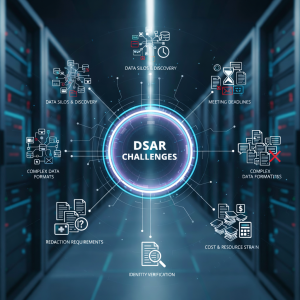
Complex Data Formats: Personal data can exist in many formats (structured databases, unstructured documents, emails, chat logs), making aggregation and presentation challenging.
Redaction Requirements: Often, the requested data will contain personal information of other individuals that needs to be redacted to protect their privacy, adding another layer of complexity.
Identity Verification: Robust identity verification without introducing undue friction for legitimate requesters is a delicate balance.
Meeting Deadlines: The strict timeframes demand efficient processes and quick turnaround times.
Legal Interpretation: Understanding the nuances of different data protection laws and their applicability to specific requests requires expert knowledge.
Cost and Resource Strain: Manual DSAR processes are resource-intensive, requiring significant staff time and effort.
Audit Trail and Accountability: Maintaining a clear audit trail of all DSAR activities is essential for demonstrating compliance to regulators.
Best Practices for Efficient DSAR Management
To navigate the complexities of DSARs, organizations should adopt a strategic approach and implement robust processes:
Develop a Clear DSAR Policy and Procedure: Document a clear, step-by-step process for handling DSARs, from receipt to fulfillment.
Train Employees: Ensure all relevant staff, especially those in customer service, HR, legal, and IT, are adequately trained on DSAR procedures and their responsibilities.
Data Mapping and Inventory: Conduct regular data mapping exercises to understand where personal data is stored, what types of data are held, and who is responsible for it. This is fundamental for efficient data discovery.
Establish Secure Communication Channels: Provide secure and accessible channels for individuals to submit DSARs.
Implement Robust Identity Verification: Use reliable methods to verify the identity of requesters.
Centralize DSAR Management: Avoid fragmented approaches. A centralized system helps track requests, manage deadlines, and maintain an audit trail.
Automate Where Possible: Leverage technology to automate repetitive tasks, such as initial request acknowledgment, data discovery, and redaction.
Regularly Review and Update: Data environments and regulations change, so regularly review and update DSAR policies and procedures.
Proactive Data Minimization: Practice data minimization by only collecting and retaining personal data that is strictly necessary, reducing the scope of potential DSARs.
Why Enactia is Your Essential Partner in DSAR Management
Addressing the challenges of DSARs manually can be overwhelming, costly, and expose organizations to significant compliance risks. This is where specialized solutions like Enactia become indispensable.
Enactia offers a comprehensive, intelligent platform designed to automate and streamline every aspect of DSAR management, transforming a burdensome obligation into a manageable, efficient process.
How Enactia Optimizes DSAR Management:
Automated Request Intake and Verification: Enactia provides secure, customizable portals for data subjects to submit requests, automating the initial intake and identity verification process, reducing manual effort and errors.
Intelligent Data Discovery and Mapping: Leveraging advanced AI and machine learning, Enactia can connect to your disparate data sources (on-premise, cloud, structured, unstructured) to quickly identify and locate all relevant personal data pertaining to a DSAR. This eliminates the arduous task of manual searching across silos.
Automated Data Collection and Aggregation: Once identified, Enactia automatically collects and aggregates the data, presenting it in a clear, organized format, ready for review.
Smart Redaction and Anonymization: Enactia’s powerful tools intelligently identify and suggest redactions for sensitive information belonging to other individuals or exempt categories, ensuring privacy and compliance with legal requirements.
Workflow Management and Collaboration: The platform provides intuitive workflows for assigning tasks, tracking progress, managing deadlines, and facilitating collaboration among different departments involved in the DSAR response process. This ensures accountability and helps meet strict regulatory timeframes.
Template-Driven Communications: Enactia offers customizable templates for all DSAR communications, from acknowledgments to final responses, ensuring consistency, accuracy, and legal compliance.
Comprehensive Audit Trail and Reporting: Every action taken within the Enactia platform is meticulously logged, creating an immutable audit trail. This provides irrefutable evidence of compliance for regulators and internal audits. Detailed reporting capabilities offer insights into DSAR volumes, types, and response times.
Scalability and Flexibility: Whether you’re a small business or a large enterprise, Enactia scales to meet your needs, adapting to increasing DSAR volumes and evolving data environments.
Multi-Jurisdictional Compliance: Enactia is built with global privacy regulations in mind, helping organizations navigate the complexities of GDPR, CCPA, and other data protection laws, regardless of their operational footprint.